What is camelina?
You might already be familiar with camelina oil, that golden oil with slightly herbaceous and nutty flavors that is quietly making its way into Québec kitchens. Well, the plant that produces it has another lovely surprise in store for us: its seeds! And believe me, they are definitely worth trying.
Camelina (Camelina sativa) is a plant in the Brassicaceae family, the same large family as cabbage, broccoli, and canola. What fascinates me about it is its history. Cultivated since the Bronze Age, its oil was once used to nourish people… and to light their homes! A plant that literally illuminated generations before making a strong comeback in our kitchens. Its richness in omega-3 essential fatty acids probably explains its recent surge in popularity.
Today, camelina is grown here in Quebec. So, in addition to benefiting our health, choosing its seeds is also a great way to support our local farmers. I love it when we can do both at the same time, don't you agree? And a little ecological bonus: it's a short-season plant that matures in only 85 to 100 days.
2 versions, 2 personalities
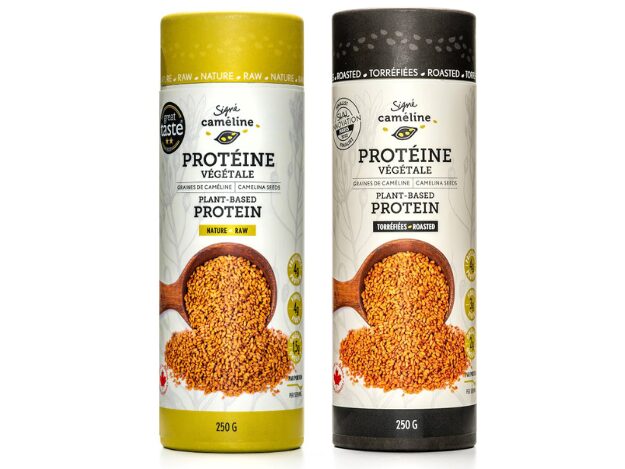
There are two categories of seeds: natural and roasted.
Natural camelina seeds have a mild and delicate flavor profile. They offer a subtle taste with notes of butter, fresh herbs, and nuts, with a texture that is both smooth and slightly crunchy.
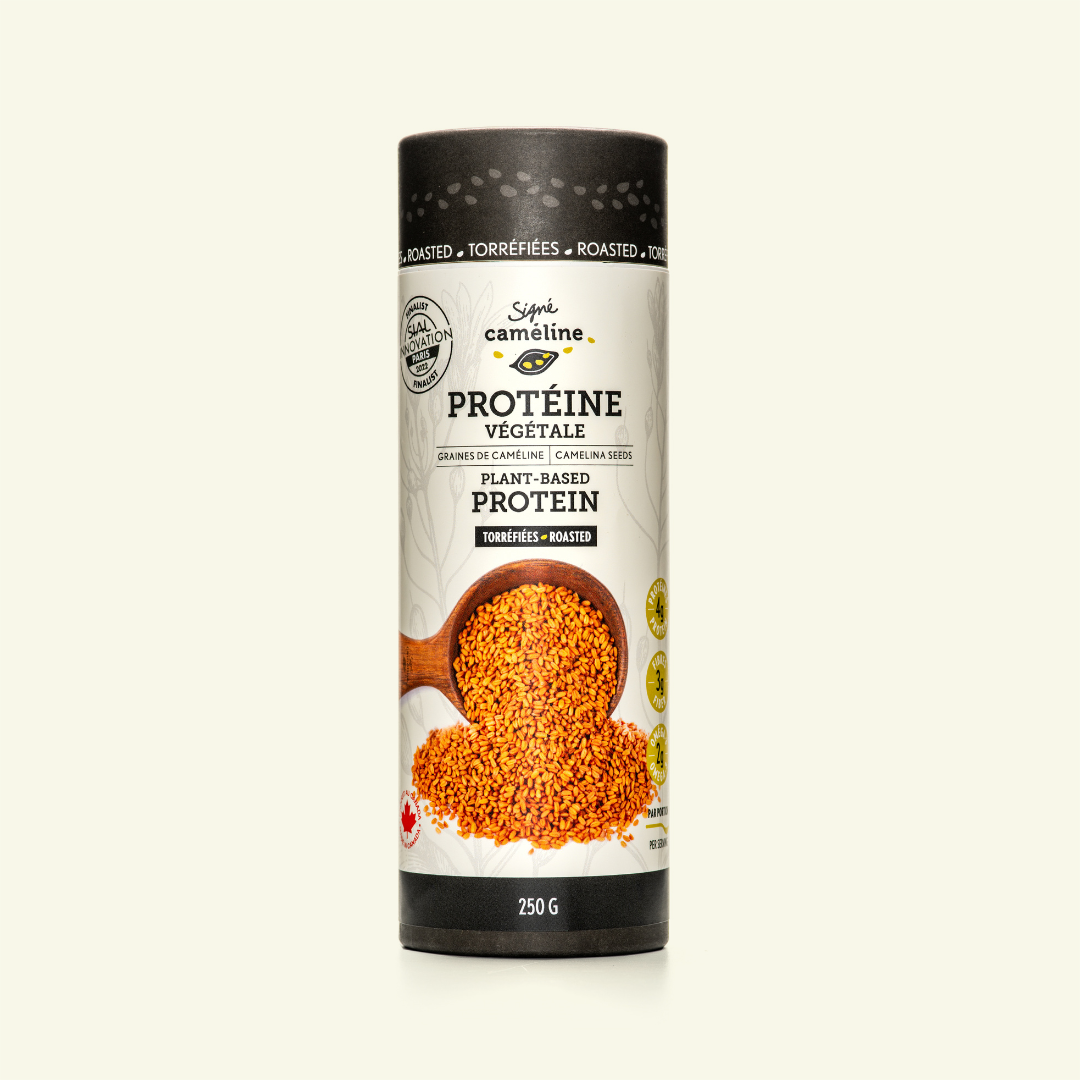
Roasted camelina seeds, that's another story! Roasting truly transforms their personality. Their flavor is reminiscent of sesame, with subtle notes of roasted peanuts and hazelnut… both a spice and a plant-based protein. It's also an excellent Quebec alternative to toasted sesame seeds.
In summary:
- Natural → mild, buttery, slightly herbaceous, and nutty: perfect for cold preparations like overnight oats, smoothies, and sauces.
- Roasted → more pronounced, smoky, reminiscent of toasted sesame and roasted peanuts: ideal for finishing a hot dish, a salad, or a stir-fry.
I invite you now to discover their benefits and other ideas for uses and recipes.
Seeds with a lot to offer!
Don't let their size fool you! Even though camelina seeds are tiny, they are true nutritional powerhouses. A 15g (1 1/2 tbsp) serving provides 1.5g of omega-3s, 4g of protein, and 4g of fiber. And that's not all! They also contain phosphorus, magnesium, vitamin B1 and B3, essential nutrients for our energy, bone health, and nervous system. To learn more about the role of vitamins and minerals, you can read my article right here.
Very versatile seeds
What I really like about camelina seeds is their versatility in cooking. They can be used in both hot and cold dishes: soups, stir-fries, salads, tartares, overnight oats… they adapt to everything! And a little nutritionist secret: like chia seeds, camelina seeds have mucilaginous properties. This means they absorb the liquid around them and swell slightly, creating a creamy and pleasant texture. This is precisely what makes them so great in overnight oats. They thicken the oatmeal while boosting its nutritional value. Two for one, I love it!
Natural or roasted, camelina seeds can easily be incorporated into many everyday recipes.
How to add camelina seeds to your breakfast
-
Smoothie and smoothie bowl
- Add 15 ml (1 tbsp) of camelina seeds to your smoothie or smoothie bowl. This way, you'll benefit from their nutritional goodness, while adding an original touch to your breakfast.
-
Avocado toast
- Spread toasted whole-wheat bread with mashed avocado, top with sliced hard-boiled egg, and sprinkle with roasted camelina seeds. Divine!
-
Overnight oats
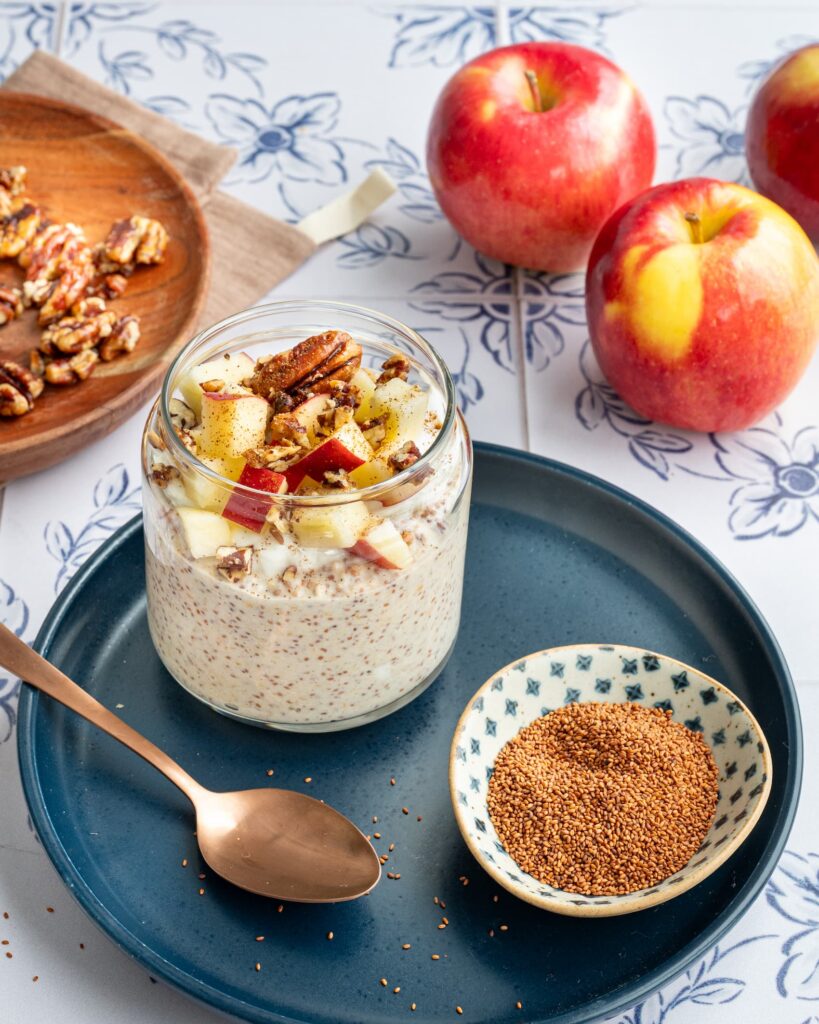
- Combine 250 ml (1 c.) milk, 125 ml (½ c.) rolled oats, 30 ml (2 tbsp) jam of choice, and 20 ml (4 tsp) camelina seeds. Let sit in the refrigerator overnight and enjoy the next morning. If desired, garnish with fresh fruit before serving. To try: Apple Pie Camelina Overnight Oats
-
Breakfast cookies and muffins
- Enhance the flavor and nutritional value of breakfast cookies and muffins by adding a generous amount of camelina seeds to your recipes.
How to cook with camelina seeds for lunch and dinner
For main dishes
-
Soups and pureed soups
- When serving, add a handful of camelina seeds to your soups and pureed soups for extra nutritional value.
-
Vegetables and pasta
- Spice up grilled vegetables, salads, vegetable purees, and pasta dishes with roasted camelina seeds.
-
Vegetarian chili
- Incorporate camelina seeds into your chili for added protein, texture, and flavor.
-
Crusted salmon
- Mix camelina seeds with garlic powder, salt, and pepper. Coat salmon fillets and cook them in a skillet over medium heat with camelina oil.
-
Tartares
- Incorporate natural or roasted camelina seeds into your favorite tartare for an extra crunchy touch.
-
Asian-style stir-fries
- Enhance the flavor of your next stir-fry by adding camelina seeds.
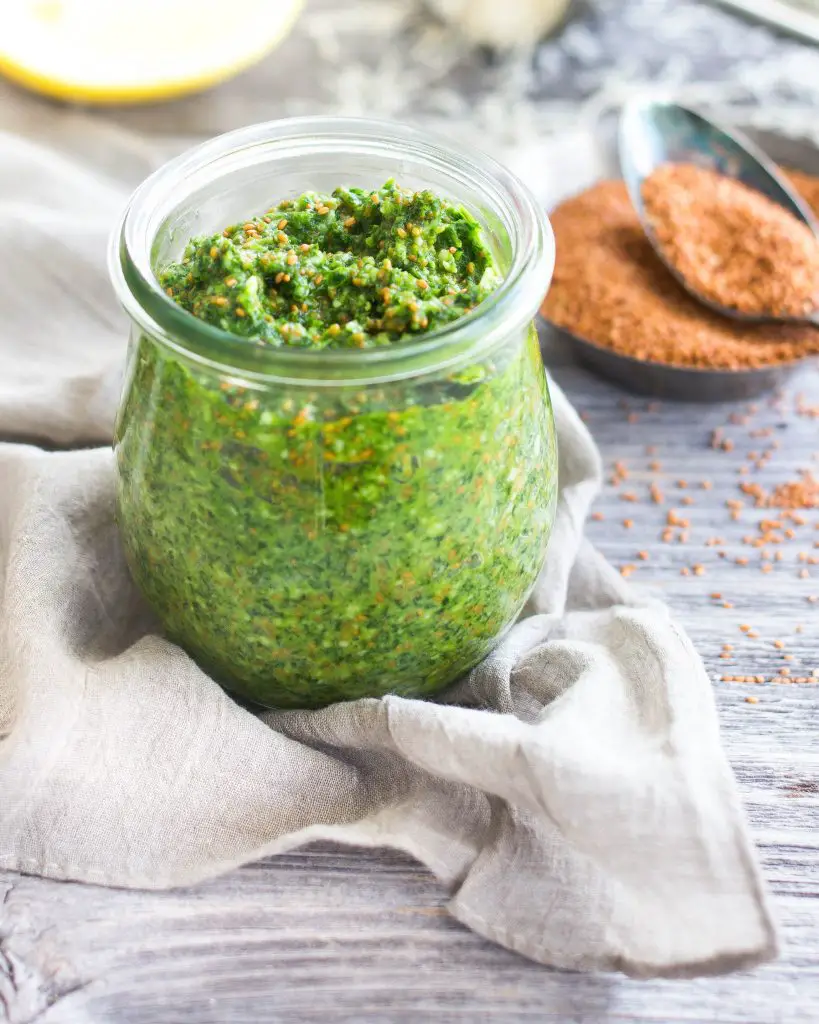
To try: Parsley and Camelina Pesto
How to incorporate camelina seeds into your snacks
-
Hummus
- Serve your hummus with crudités and sprinkle with camelina seeds for a decorative and nutritious touch.
-
Granola bars and energy balls
- Add camelina seeds to your favorite recipes for a different and nutritious twist.
-
Fruit crisp
- Prepare a seasonal fruit crisp and add camelina seeds to the topping for a crunchy and healthy dessert.