Camelina oil is primarily recognized for its omega-3 fatty acids and natural antioxidants. It also contains a lesser-known omega-9 fatty acid that is generating increasing scientific interest: nervonic acid. Here is what it is, its role in the body, and the amount found in camelina oil.
What is nervonic acid?
Nervonic acid is part of the very-long-chain fatty acid family, and some researchers consider it as important as the omega-3s DHA and EPA (Ren et al., 2026).
It is a non-essential fatty acid: the body can produce it, unlike essential fatty acids such as omega-3 ALA, which must be obtained from the diet (Ren et al., 2026). But "non-essential" does not mean that food sources are without value. The body obtains nervonic acid by producing it, but also directly through the diet in a readily available form (Li et al., 2019). Its production in the human body requires several steps and does not always meet demand, for instance during brain development or myelin repair (Sargent et al., 1994; Liu et al., 2022). There is no official recommended intake for nervonic acid, since the body can produce it itself. Nevertheless, studies in humans show that dietary nervonic acid increases its levels in the body (Li et al., 2019; Sargent et al., 1994).
A brief history
Nervonic acid was first discovered in the brain and nervous tissue of humans and other mammals, hence its name (Liu et al., 2022; Ren et al., 2026). In 1926, Japanese researchers isolated it from shark oil (Ren et al., 2026).
Its role in the nervous system
Nerves function much like electrical wires, and myelin is the protective sheath that surrounds them and helps nerve signals travel quickly. Myelin is composed mainly of fat, and nervonic acid is one of its primary building blocks (Ren et al., 2026; Sargent et al., 1994).
Nervonic acid is also present in breast milk, particularly in colostrum, the first milk produced after birth, which is important for the infant's brain development (Liu et al., 2022).
Crossing the blood-brain barrier
The blood-brain barrier is a highly selective layer of cells that lines the blood vessels of the brain. It protects the brain by blocking most substances in the blood, so much so that many nutrients and compounds never reach brain tissue.
Ren et al. (2026) describe nervonic acid as being capable of crossing this barrier, which would allow it to support brain development and the repair of damaged nerve fibers. The reality is, however, more nuanced. In animal studies, dietary nervonic acid reached the brain primarily during the first few weeks after birth (Li et al., 2019). Researchers suggest that a specific transport pathway to the brain might exist, particularly in newborns, and this question is still under investigation (Li et al., 2019).
What research says
Lower levels of nervonic acid have been observed in people with demyelinating diseases—that is, diseases that damage the myelin sheath, such as multiple sclerosis and adrenoleukodystrophy (Li et al., 2019; Sargent et al., 1994). Currently, scientists are studying whether nervonic acid could help support myelin repair, but this research is still in its early stages (Liu et al., 2022).
Animal studies have also looked into nervonic acid and brain function. In a feeding study, an oil rich in nervonic acid changed the fatty acid composition of the blood and brain in rodents and was associated with better learning abilities and cognitive functions (Liu et al., 2022). These results have not yet been confirmed in humans.
Nervonic acid also seems to play a particularly important role in early life. Its levels in brain sphingolipids increase sharply after birth and peak around the age of 4 (Sargent et al., 1994). Breast milk from mothers of premature babies contains more nervonic acid, which could help compensate for their early arrival (Li et al., 2019).
Is nervonic acid common in the diet?
Not really. Natural oils rich in nervonic acid are relatively rare (Sargent et al., 1994), and it is absent from main vegetable oils such as soy, canola, and sunflower (Li et al., 2019; Liu et al., 2021). Camelina oil stands out: it contains not only nervonic acid, but also the fatty acids the body uses to produce it (Hajiazizi et al., 2023). It is also found in fish oils, breast milk, and seed oils of a few plants, such as borage and hemp (Li et al., 2019; Liu et al., 2022; Sargent et al., 1994). The richest plant sources are specialized seeds that are not part of the common diet, such as those of the honesty plant (Lunaria annua), the canary creeper (Tropaeolum speciosum), and the Malania oleifera tree (Liu et al., 2021).
Nervonic acid in camelina oil
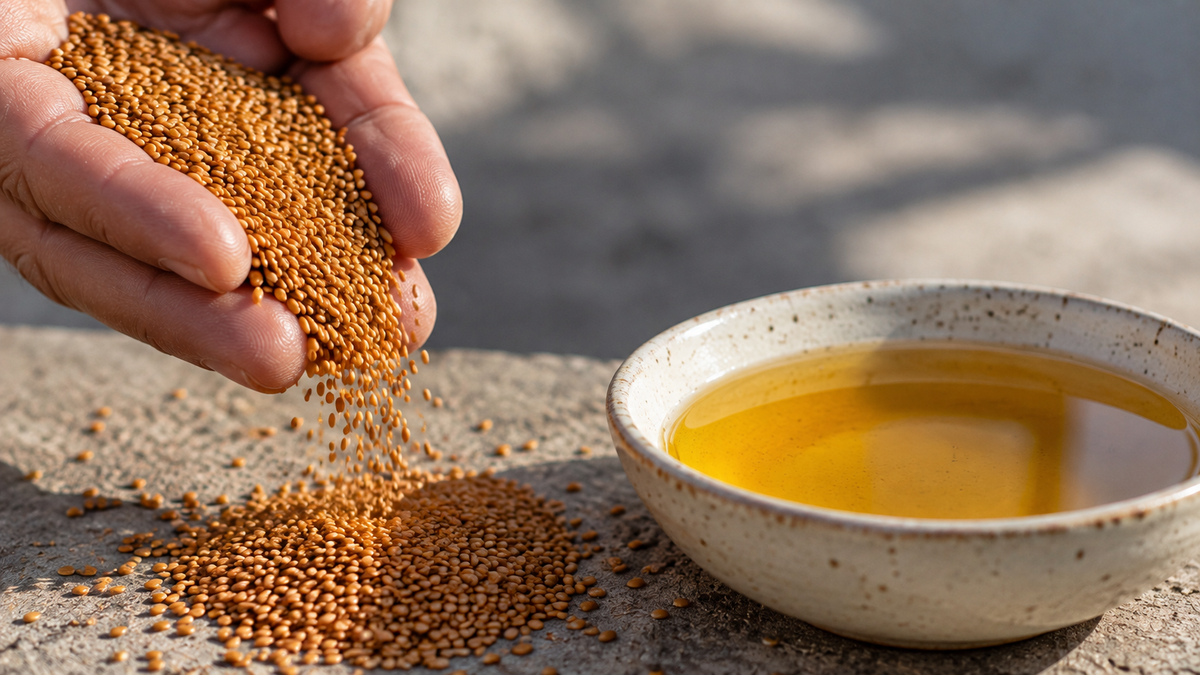
Oils are almost entirely composed of fat, and fats are formed in large part by smaller elements called fatty acids. Published analyses report approximately 0.5 to 0.8% nervonic acid among the fatty acids in camelina oil (Hajiazizi et al., 2023; Xia et al., 2024).
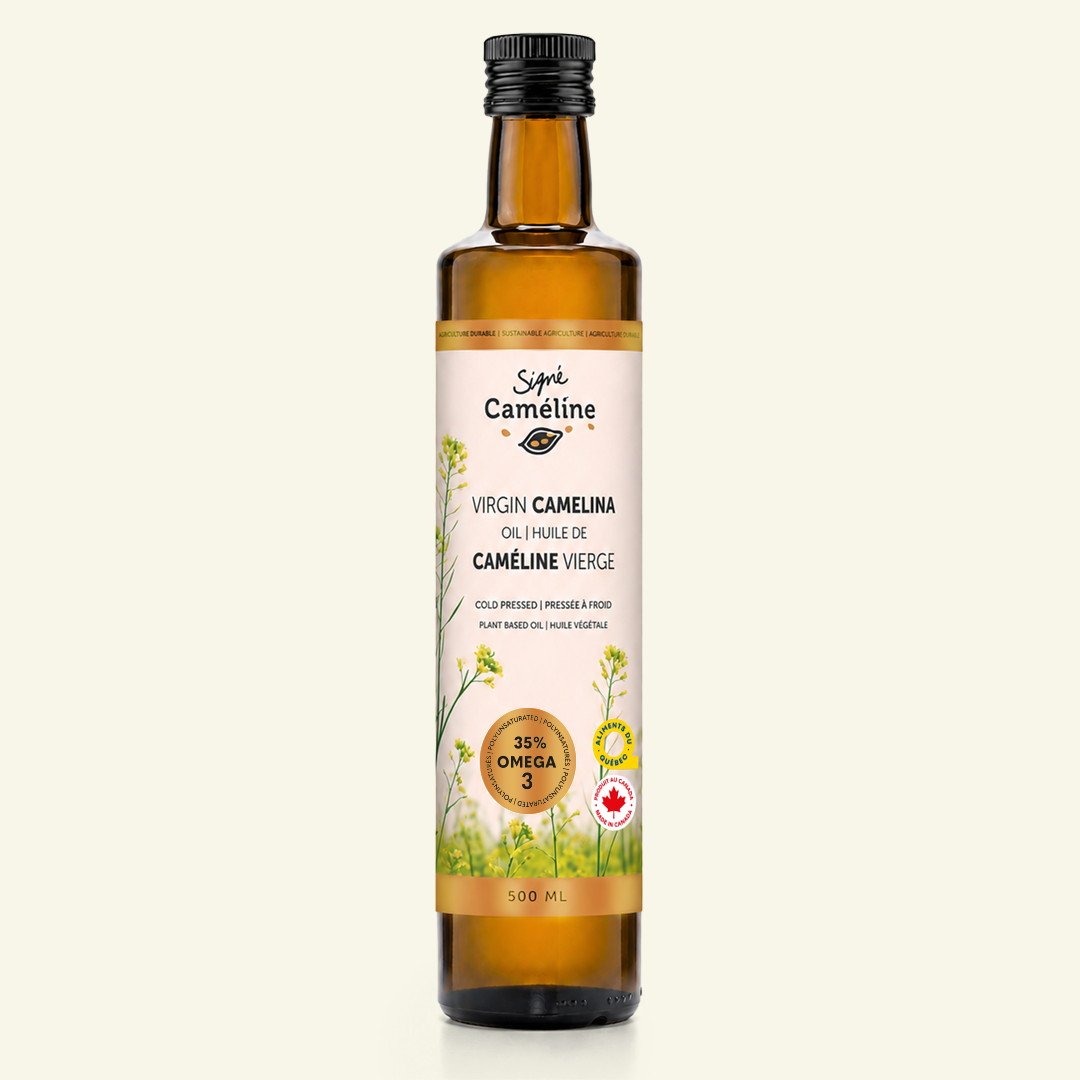
Our own analyses are consistent with the scientific literature: Signé Caméline cold-pressed camelina oil contains approximately 45 mg of nervonic acid per 2-teaspoon (10 mL) serving.
Growing interest in nervonic acid
Nervonic acid is attracting a great deal of attention for its potential in the nutraceutical and pharmaceutical fields (Li et al., 2019). Since its natural sources are limited and its extraction is costly, researchers are actively exploring new ways to produce it (Liu et al., 2022). This research includes the genetic modification of oilseed crops and microorganisms, such as yeast, to produce more nervonic acid (Li et al., 2019; Liu et al., 2022). Camelina itself has been used in this research: genetically modified lines have achieved 6 to 12% nervonic acid (Li et al., 2019). Signé Caméline oil comes from non-genetically modified camelina and naturally contains nervonic acid. At Signé Caméline, it is primarily our international buyers, particularly in Asia, who are interested in our oil for its natural nervonic acid content.
References
Hajiazizi, F., Sadeghi, A., & Karimi, A. (2023). The effects of dietary inclusion of Camelina sativa on performance and ascites incidence in broilers subjected to cold exposure. Veterinary Medicine and Science, 9(4), 1711–1725. https://doi.org/10.1002/vms3.1185
Li, Q., Chen, J., Yu, X., & Gao, J.-M. (2019). A mini review of nervonic acid: Source, production, and biological functions. Food Chemistry, 301, 125286. https://doi.org/10.1016/j.foodchem.2019.125286
Liu, F., Wang, P., Xiong, X., Zeng, X., Zhang, X., & Wu, G. (2021). A review of nervonic acid production in plants: Prospects for the genetic engineering of high nervonic acid cultivars plants. Frontiers in Plant Science, 12, 626625. https://doi.org/10.3389/fpls.2021.626625
Liu, F., Wu, R., Ma, X., & Su, E. (2022). The advancements and prospects of nervonic acid production. Journal of Agricultural and Food Chemistry, 70, 12772–12783. https://doi.org/10.1021/acs.jafc.2c05770
Ren, D., Chai, X., Zhao, W., Zhang, Y., Li, E., & Zhao, S. (2026). Dietary supplementation with Acer truncatum seed modulates lipid profiles and enriches unsaturated fatty acids in egg yolk of laying hens. Poultry Science, 105, 107048.
Sargent, J. R., Coupland, K., & Wilson, R. (1994). Nervonic acid and demyelinating disease. Medical Hypotheses, 42, 237–242. https://doi.org/10.1016/0306-9877(94)90122-8
Xia, Y., Zhu, J., Qu, M., Yang, W., Fu, S., Yu, L., & Fan, B. (2024). Acute and subchronic oral toxicity study of Camelina sativa oil in Wistar rats. Heliyon, 10(1), e23654. https://doi.org/10.1016/j.heliyon.2023.e23654