Vitamin E: much more than a simple antioxidant
Vitamin E is a fat-soluble vitamin known for its powerful antioxidant role. It protects cells against oxidative stress and contributes to maintaining good cardiovascular health.
In vegetable oils, vitamin E also plays a fundamental role, protecting fatty acids, especially omega-3s, against oxidation.
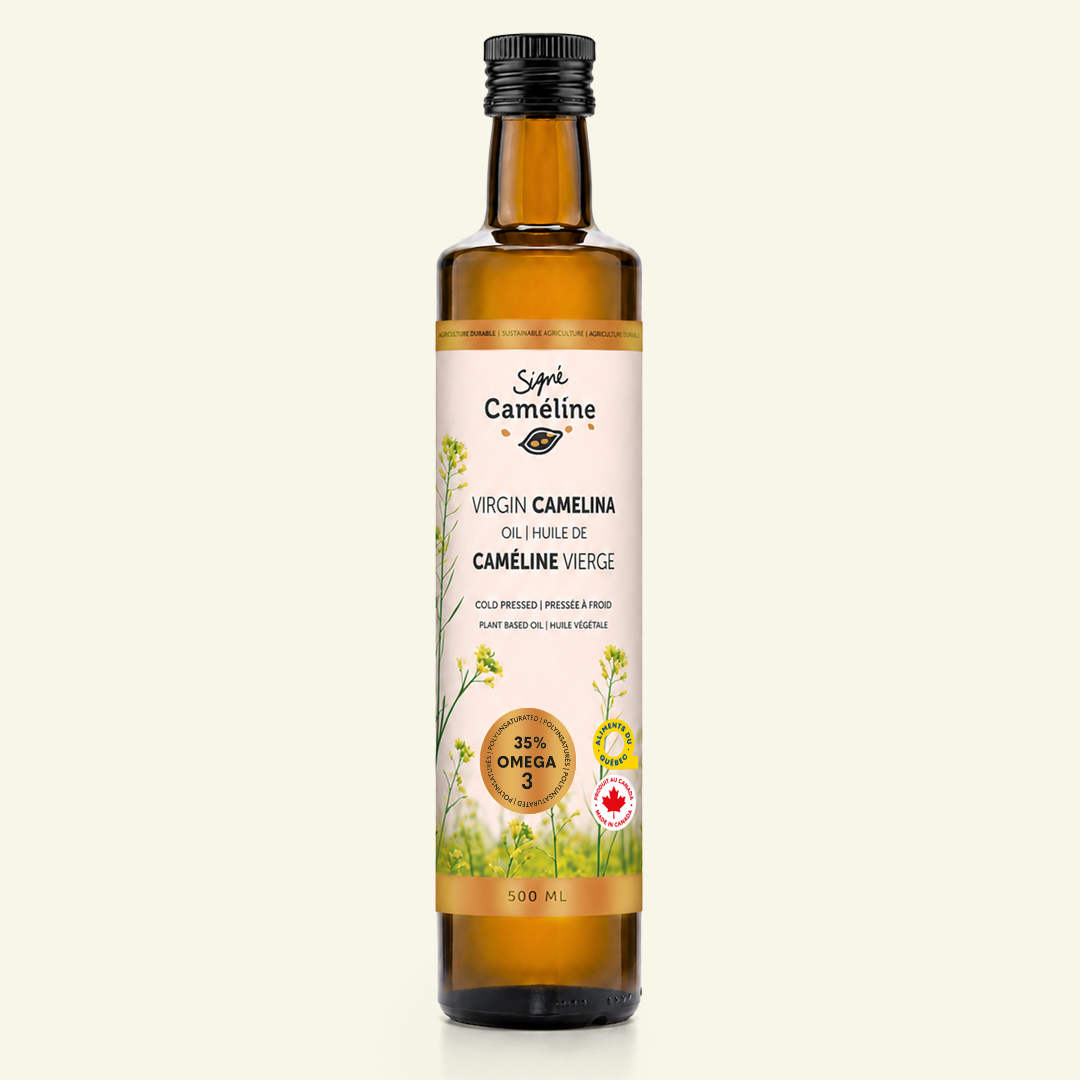
Camelina oil stands out for its naturally high vitamin E content, mainly in the form of tocopherols, which gives it remarkable stability despite its richness in polyunsaturated fatty acids.
Tocopherols: the active form of vitamin E
Tocopherols are natural compounds that constitute vitamin E in vegetable oils. Several forms exist (alpha, beta, gamma, and delta), each with specific antioxidant properties.
In camelina oil:
· Tocopherols act as a natural shield against oxidation
· They slow down rancidity
· They extend the oil's shelf life without added preservatives
It is thanks to this natural richness that camelina oil is much more stable than several other omega-3-rich oils, such as flaxseed oil.
Why can camelina be stored on the counter?
Omega-3-rich oils are often fragile. For example, flaxseed oil must be kept refrigerated because it oxidizes very quickly.
Camelina, however, is an exception.
Thanks to its unique combination of omega-3 and vitamin E, camelina oil:
· Is more resistant to air and light
· Remains stable at room temperature
· Can be stored on the counter, away from direct light
A practical advantage for daily use, without compromising quality.
Phytosterols: another plant treasure
Phytosterols are compounds naturally present in plants. Their structure is similar to cholesterol, allowing them to:
· Contribute to reducing cholesterol absorption
· Support cardiovascular health
· Strengthen the overall nutritional profile of the oil
Camelina oil naturally contains phytosterols, adding to its numerous health benefits and its positioning as a high-quality functional oil.
A high smoke point: up to 475 °F
Another often overlooked characteristic: camelina oil's high smoke point, reaching approximately 475 °F (245 °C).
This means that:
· The oil tolerates heat well
· It maintains its stability during moderate to high-temperature cooking
· It produces fewer undesirable compounds when heated
This performance is directly linked to its oxidative stability, supported by vitamin E and tocopherols.
Result: an oil suitable for both cold use and cooking, which is rare for an omega-3-rich oil.
Camelina: a naturally complete oil
In summary, camelina oil is distinguished by:
· Its richness in vitamin E and tocopherols
· The natural presence of phytosterols
· Superior stability
· Easy countertop storage
· A high smoke point (475 °F)
A unique balance of nutrition, stability, and versatility, making camelina a modern, sustainable vegetable oil perfectly suited to today's needs.
Link to our products: Oils, sauce and seeds – Signé Caméline
Link to our other blog posts: Blog – Signé Caméline
Link to our recipes: RECIPES – Signé Caméline
Scientific sources
Slavova-Kazakova, A.; Marcheva, M.; Taneva, S.; Momchilova, S. Oxidative Stability of the Oil from Camelina (Camelina sativa L.) Seeds: Effects of Ascorbyl Palmitate Concentrations. Seeds 2025, 4, 38. https://doi.org/10.3390/seeds4030038
Grajzer M, Szmalcel K, Kuźmiński Ł, Witkowski M, Kulma A, Prescha A. Characteristics and Antioxidant Potential of Cold-Pressed Oils-Possible Strategies to Improve Oil Stability. Foods. 2020 Nov 8;9(11):1630. doi: 10.3390/foods9111630. PMID: 33171600; PMCID: PMC7695170. https://pubmed.ncbi.nlm.nih.gov/33171600/