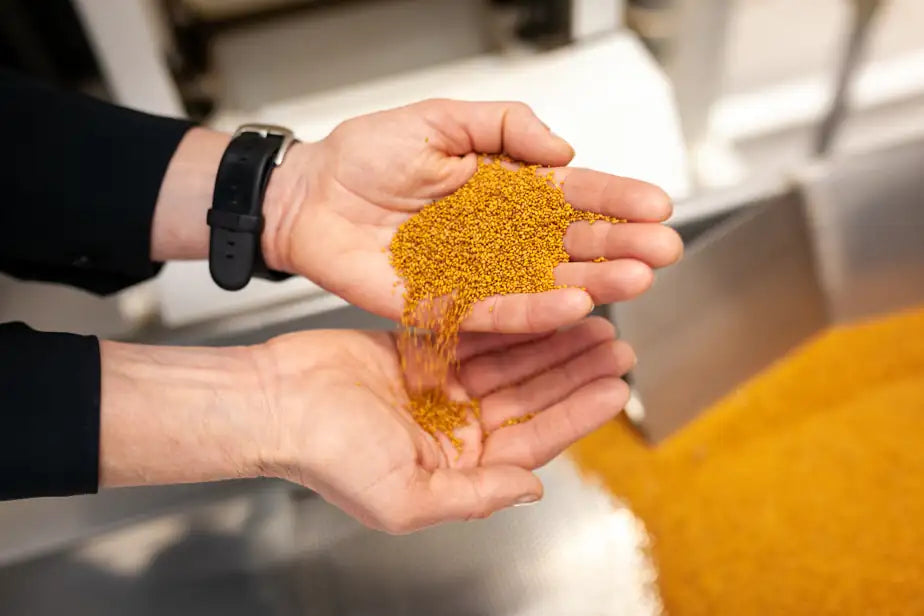

"Our sales in Quebec will increase by 60% in 2024 compared to 2023," calculates Chantal Van Winden, president of Olimega, which is behind the Signé Caméline brand. The price of olive oil is certainly partly responsible for this significant increase.
"In the agri-food sector, we don't see these numbers often," says the entrepreneur about her sales growth. The price of her oil has remained relatively stable for 10 years. Camelina is an oilseed plant that grows well in northern climates. It can be used to make oil, just like sunflower, canola, or hemp.
Camelina oil has been produced in Quebec for about ten years, but the ingredient remained the cooking secret of a select group of insiders who preferred it to olive oil, partly because it's a local product. With the surge in olive oil prices over the past two years, the group is beginning to gain momentum.
"It's a local alternative that's a great replacement for olive oil," says Guillaume Mathieu, co-founder of Ilot, a consulting firm that supports local biofood companies. "From the moment the price becomes more attractive than olive oil for a local product, I think it can help it finally take off."
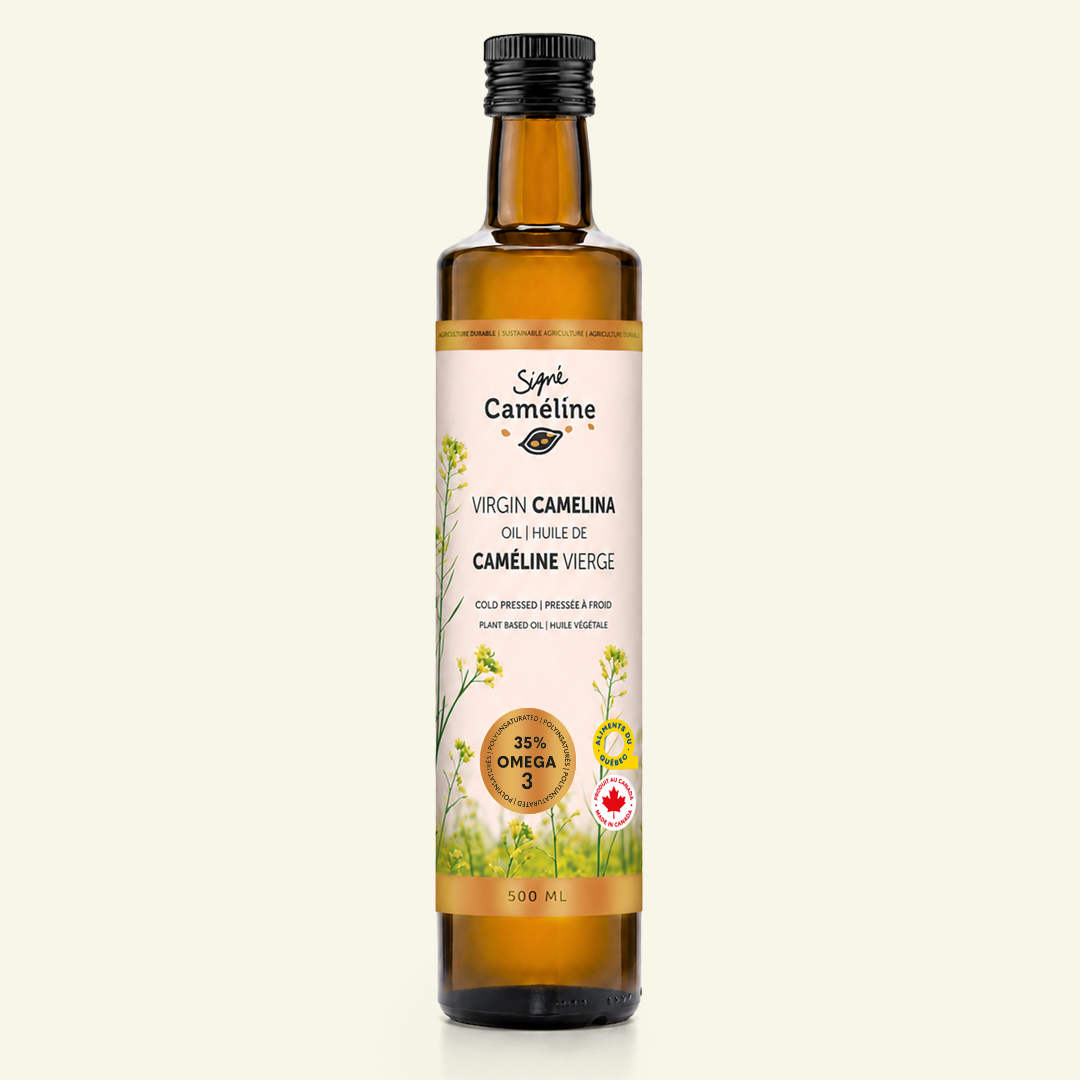
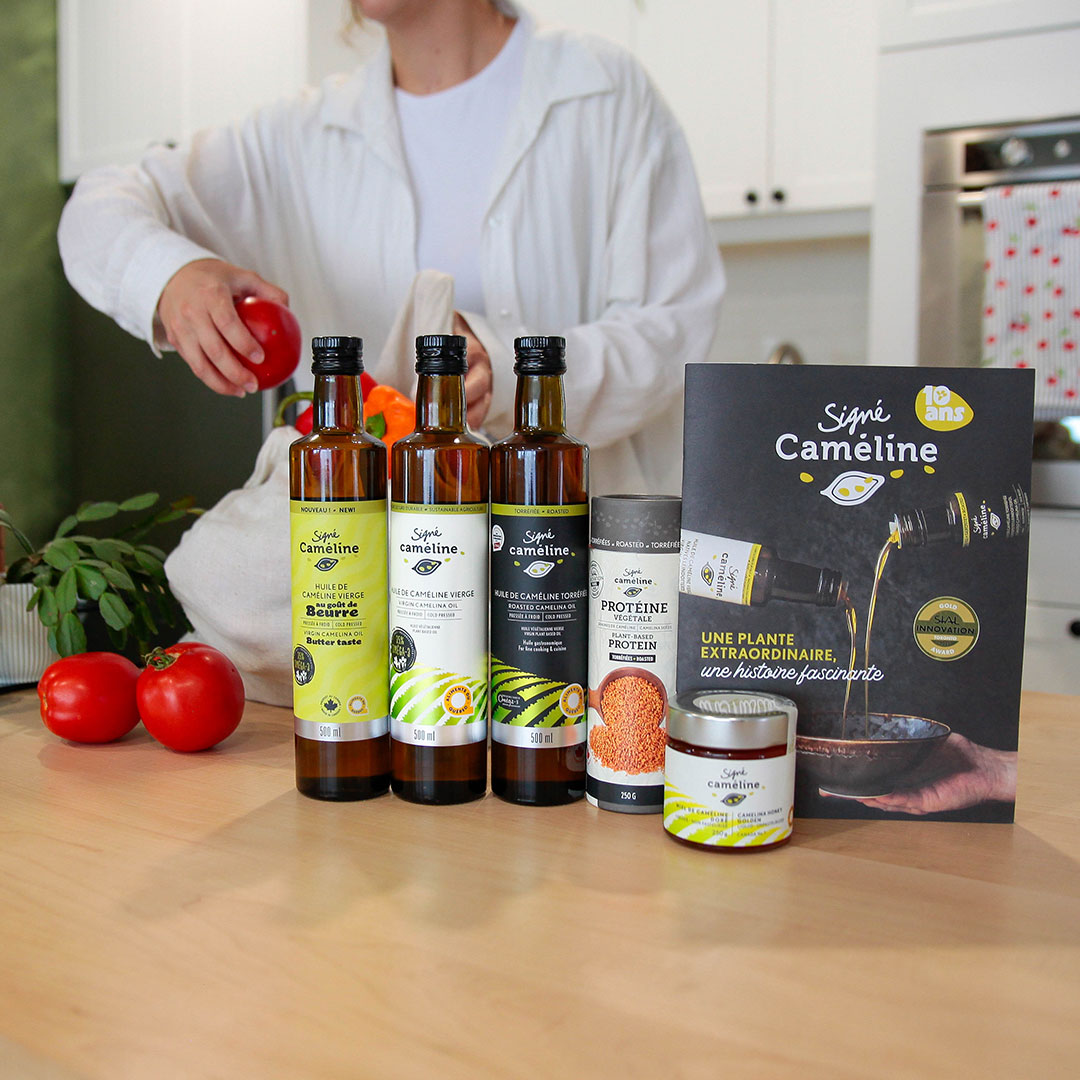
A 500 ml bottle of Signé Caméline oil retails for around $18, a price lower than that of a comparable quality olive oil. "Quality olive oils sell for $10 more," says Chantal Van Winden.

PHOTO KARENE-ISABELLE JEAN-BAPTISTE, ARCHIVES SPECIAL COLLABORATION
“We would like to become as well-known as olive oil in Quebec,” confides Chantal Van Winden.
Last year, Olimega processed 600 tons of grain—produced on its land in Montérégie and with partners in Témiscamingue. Around 40% of the oils are exported, primarily to Asia, where the healthy food market is thriving. This is particularly true in China, but also in Korea and Japan, where the company also markets the meal (the grain residue after oil extraction) as a supplement for Japanese racehorses! A supplement for urban chickens is also sold on the American market, and Signé Caméline oils can also be found in the United States, at Whole Foods and on Amazon.
An oil from here
While promoters of camelina oil praise its nutritional and taste qualities, the wave of love for buying local is also driving this growth spurt.
"People tell us that from an environmental perspective, it's a win-win situation, since olives don't grow here and the oil travels thousands of kilometers before arriving here," explains Audrey Bouchard, general manager of Ferme Tournevent in Lac-Saint-Jean, which produces several organic oils.
"We feel the local enthusiasm, with what's happening at the Canadian-American level," she continues. Even though olive oil is largely imported from Europe, this revival also supports oils.
"I hear more and more often people telling us that they no longer buy olive oil, that they only buy local oils," says Audrey Bouchard.
OLIVE OIL PRICE SOAR
This isn't the first time olive oil prices have been driven up by poor harvests in producing countries. While olive oil prices have fallen in recent months, they remain high due to frequent droughts in some parts of the world—think Mediterranean countries like Tunisia, Greece, and Italy, and even Spain, the world's largest producer. This makes it one of the most counterfeited foods in the world, as cheaper oils are added to create a blend.

Tournevent has just doubled its storage space and pressing capacity in Hébertville to expand production and distribution. The company opened an Economuseum of Oil Mills last year, which offers direct contact with consumers. All of this combined has resulted in a 126% increase in sales over the past year for all Tournevent organic oils: hemp, flax, camelina, and others.
The challenge remains: comparing like with like. The world of oils is vast, and you can find products of all qualities and prices.
"When you compare cold-pressed organic canola oil and deodorized canola oil, they are not the same thing," warns Audrey Bouchard.
Janel Laplante also deplores this confusion. The owner of Ferme Améroquois, whom I met at the Expo Manger Santé et Vivre Vert last week, produces sunflower oil. While demand for his product spiked sharply in 2023, it subsequently subsided. The entrepreneur believes that the purchase of imported sunflower oil by major retailers has a lot to do with it. "It costs a lot less," he says, "and consumers don't notice the difference."
"The consumer has three seconds to make their decision in front of the oil aisle," explains Guillaume Mathieu of Ilot. And since Quebec camelina oil and other local oils are drowned in a sea of olive oils, they can go unnoticed.
"When retailers see that $30 or $35 bottles of olive oil are sticking to the shelves, maybe they'll be tempted to give more space to a quality, more affordable oil," he says.
According to this food industry observer, the democratization of camelina oil will come through its public use by influential people. Chefs and chains. "When I say chain, I'm talking about family restaurants," says Guillaume Mathieu, who suggests using camelina oil, for example, with salad. And that it be written on the menu.