Camelina in winter: how it survives the Quebec cold
By Chantal, founder of Signé Caméline
Discover how the camelina protects itself during the Quebec winter and why snow is its best ally.
When the cold weather sets in in Quebec, our crops face extreme conditions. Camelina, a hardy plant prized for its oils, has a natural strategy for surviving the winter: dormancy. But how does it work? And what are the risks in the event of intense cold? Winter isn't always mild… and I'm going to explain why.
When the cold sets in
The camelina plant enters dormancy to protect itself and await spring. This mechanism slows its metabolism and allows it to conserve energy until the return of warmer weather.
Its best ally: snow
A blanket of snow and normal temperatures? That's exactly what camelina needs to survive the winter safely. The snow acts as a natural insulator and protects the roots from sudden temperature changes. When I see our fields covered in snow, I know the camelina is well protected.
Beware of extreme cold
Several consecutive days at -30°C can be damaging to crops. Normal temperatures are expected for southern Quebec this winter.
What is camelina?
Camelina (Camelina sativa) is an oilseed plant cultivated for over 3,000 years in Europe. Rediscovered for its exceptional qualities, it adapts perfectly to the Quebec climate.
This hardy plant produces oil-rich seeds, renowned for their high omega-3 content and antioxidant properties. And the best part? It requires little water and little fertilizer. A true champion of sustainable agriculture.
The benefits of camelina oil
1. Cardiovascular health
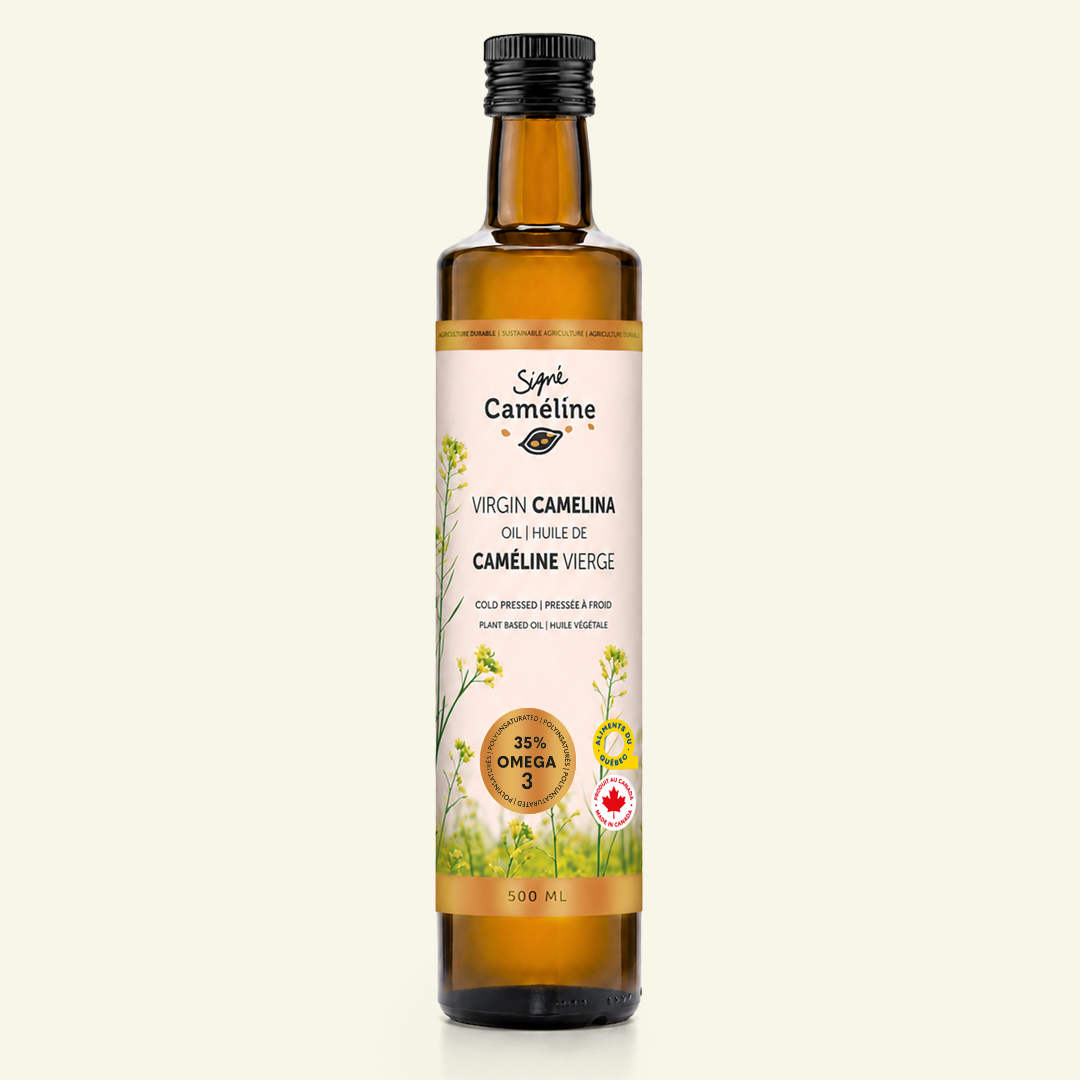
Rich in omega-3 (35-40%), camelina oil contributes to heart health and helps reduce inflammation.
2. Natural Antioxidants
Its high content of vitamin E and tocopherols protects cells against oxidative stress.
3. Skin care
Used in cosmetics for its moisturizing and regenerating properties, ideal for sensitive skin.
4. Ecological Culture
Requires little water and fertilizer, resists disease and improves soil structure.
The camelina cycle in Quebec
Autumn — Sowing
We sow before the frost so that the roots can establish themselves.
Winter — Dormancy
Under the snow, she sleeps, protected.
Spring — Growth
As soon as the thaw begins, the camelina resumes its growth rapidly. It flowers in May-June with pretty pale yellow flowers.
Summer — Harvest
In July, these golden seeds, dried in the field, are harvested, ready to become an exceptional oil. Each pod contains precious seeds, brimming with beneficial properties, ready for extraction.
My tips for a successful winter
• Sowing at the right time — Sow 4-6 weeks before frost to allow for good root development.
• Adequate drainage — Avoid poorly drained soils where stagnant water can freeze and damage roots.
• Snow cover — Snow acts as a natural insulator. A minimum of 10-15 cm effectively protects plants.
• Monitor the thaw — Repeated freeze-thaw cycles in spring can be more damaging than constant cold.
Camelina is a resilient and sustainable crop that provides us with an oil of exceptional benefits. Its cycle is simple yet fascinating: sowing in autumn, dormancy in winter, growth in spring, and harvest in summer. And every step counts. We're hoping for a normal winter in southern Quebec. The camelina itself has indeed gone dormant with this light dusting of snow.
Happy start to winter!
Chantal


xx
#SustainableAgriculture #SignedCaméline #QuebecWinter #Omega3 #LocalProduce #OrganicFarming